







What Is The Living Infrastructure Layer™
For generations, buildings have relied on five recognized infrastructure systems.
The Living Infrastructure Layer™ introduces a sixth.
It recognizes nature as infrastructure—not landscaping.
The Six Infrastructure Layers

The Missing Layer
For over a century, the building industry has recognized five essential infrastructure systems.
- Structural.
- Mechanical.
- Electrical.
- Plumbing.
- Fire Protection.
Each is considered indispensable because buildings cannot function without them.
Yet every successful city also depends on another system that performs functions none of these can accomplish.
The Living Infrastructure Layer™.
It manages stormwater, moderates temperature, improves air quality, supports biodiversity, stores carbon, and improves resilience.
Nature has never been decoration.
Nature has always been infrastructure.
How Nature Already Performs as Infrastructure

Stormwater

Heat Regulation

Carbon

Human Health

Biodiversity

Resilience
Stormwater Managment
Nature was the original stormwater engineer long before pipes, culverts, and detention basins existed.
Healthy ecosystems capture rainfall where it lands, slow runoff, filter pollutants, recharge groundwater, and reduce flooding. The Living Infrastructure Layer™ applies these natural processes to modern buildings and cities through engineered green roofs, bioswales, rain gardens, and vegetated infrastructure.
Infrastructure Benefits
• Reduces peak stormwater runoff
• Improves water quality through natural filtration
• Recharges groundwater aquifers
• Reduces erosion and downstream flooding
• Decreases burden on municipal drainage systems
• Supports long-term climate resilience
Heat Regulation
Nature has regulated temperature for millions of years without consuming electricity.
Vegetation cools buildings and cities through shade, evapotranspiration, and by reducing the amount of heat absorbed by roofs, walls, and pavement. The Living Infrastructure Layer™ transforms these natural cooling processes into engineered infrastructure that improves energy performance, occupant comfort, and urban resilience.
Performance Benefits
- Reduces urban heat island effect
- Lowers roof and façade surface temperatures
- Reduces building cooling loads
- Improves occupant comfort
- Extends roof membrane life by reducing thermal cycling
- Supports energy efficiency and climate resilience
Carbon Storage
Nature has regulated Earth's carbon cycle for millions of years, capturing atmospheric carbon and storing it within living ecosystems.
Vegetation removes carbon dioxide from the atmosphere through photosynthesis, storing it in leaves, stems, roots, soils, and long-term biomass. The Living Infrastructure Layer™ recognizes these natural processes as infrastructure that contributes to climate mitigation while improving the performance and resilience of buildings and cities.
Climate Benefits
- Captures atmospheric carbon dioxide
- Stores carbon in vegetation and soils
- Supports corporate carbon reduction goals
- Improves ecosystem health and productivity
- Enhances long-term climate resilience
- Contributes to Net Zero and ESG objectives
Human Health & Well Being
Nature has always supported human health by creating cleaner air, cooler environments, quieter spaces, and stronger connections between people and their surroundings.
The Living Infrastructure Layer™ integrates these natural systems into the built environment, improving physical health, mental well-being, productivity, and overall quality of life. Healthy buildings and healthy cities begin with healthy ecosystems.
Health Benefits
- Improves air quality through natural filtration
- Reduces stress and supports mental well-being
- Encourages physical activity and outdoor engagement
- Creates healthier, more comfortable public spaces
- Reduces noise through natural sound attenuation
- Enhances occupant satisfaction and productivity
Biodiversity Support
Biodiversity Support
Healthy ecosystems depend on biodiversity. Plants, pollinators, birds, insects, and microorganisms work together to create resilient environments that sustain life.
The Living Infrastructure Layer™ restores habitat within the built environment by creating interconnected living systems that support native species while improving ecological performance. Biodiversity is not an environmental luxury—it is essential infrastructure that strengthens every ecosystem.
Ecological Benefits
- Creates habitat for birds and pollinators
- Supports native plant and animal species
- Improves ecosystem stability and resilience
- Strengthens ecological connectivity in urban environments
- Enhances natural pest management
- Increases overall environmental performance
Climate Resilience
As cities face increasing pressure from extreme weather, rising temperatures, flooding, drought, and environmental uncertainty, resilience has become an essential infrastructure requirement.
The Living Infrastructure Layer™ strengthens buildings and communities by using natural systems to absorb shocks, adapt to changing conditions, and recover more quickly from environmental stress. Nature provides resilient infrastructure because it continuously adapts to changing conditions.
Resilience Benefits
- Reduces vulnerability to flooding and extreme weather
- Increases long-term infrastructure durability
- Supports climate adaptation strategies
- Improves urban environmental stability
- Strengthens community resilience
- Enhances long-term building performance
Why This Changes Everything
For generations, we've designed buildings around five infrastructure systems.
The Living Infrastructure Layer™ recognizes a sixth.
Nature already manages stormwater, regulates temperature, stores carbon, supports biodiversity, improves human health, and strengthens resilience.
These aren't landscaping benefits.
They are essential infrastructure services.
When we begin engineering with nature instead of around it, buildings become more efficient, cities become more resilient, and infrastructure performs the way nature intended.
Nature isn't decorative.
Nature has always been infrastructure.
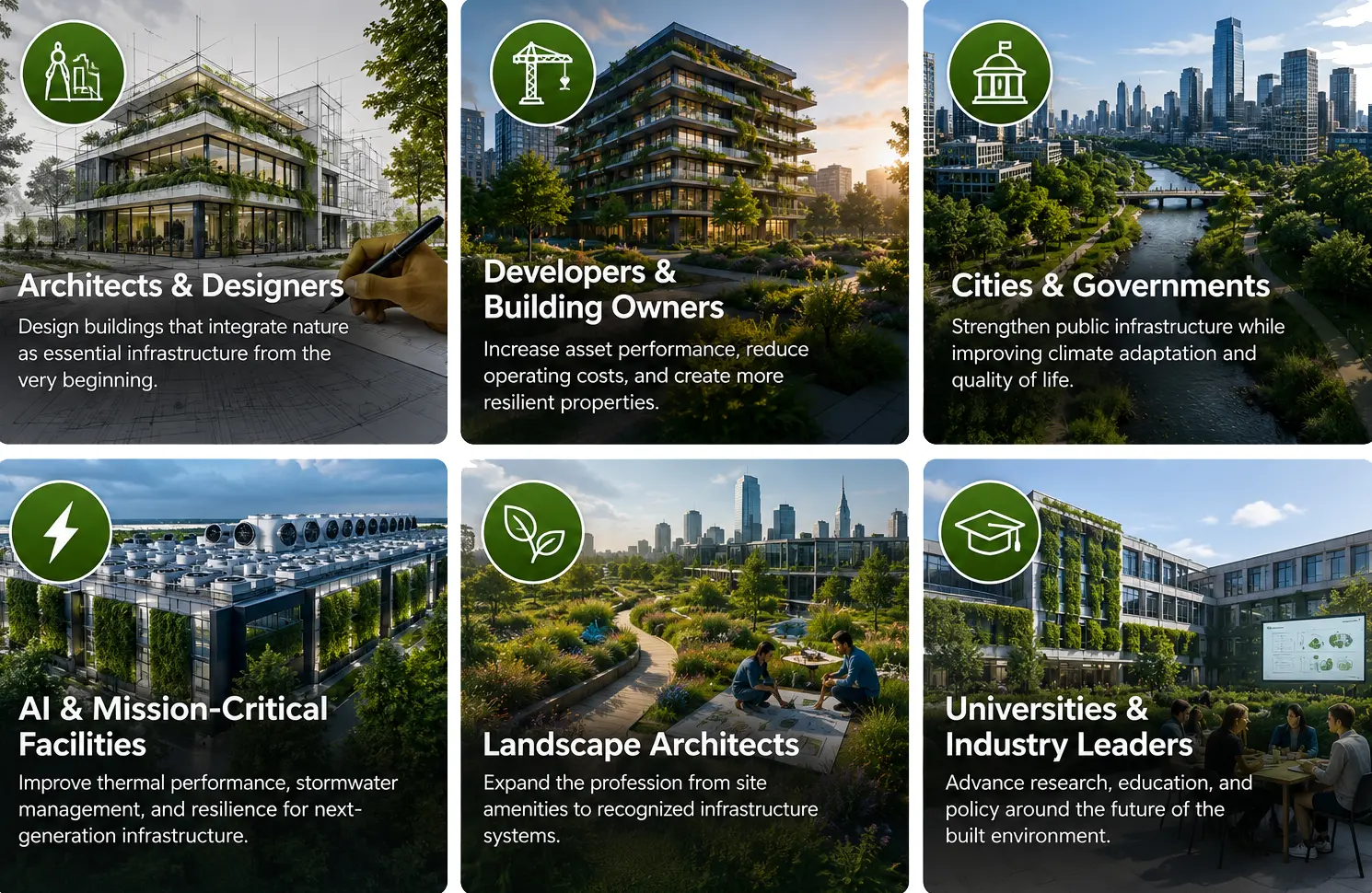
Who Should Be Thinking About the Living Infrastructure Layer™
The Living Infrastructure Layer™ applies wherever building performance, resilience, sustainability, and long-term asset value matter.
The Living Infrastructure Layer™
Discover the complete framework, supporting research, real-world applications, and the vision behind recognizing nature as the sixth essential infrastructure layer.
Bring The Living Infrastructure Layer™ to your organization, conference, university, government agency, or professional event through keynote presentations, workshops, and executive briefings on the future of engineered living infrastructure.
"Nature isn't the future of infrastructure.
It has always been infrastructure."
— George Irwin